
My Most-Used Props
My vintage cast iron skillet prop has appeared in more shoots than almost anything else in my collection. I found it in an antique shop on Burnet Road in Austin, and from the moment I picked it up, I knew it had a place in my work.
I Found It at an Antique Shop and Never Put It Down
There’s an antique store on Burnet Road here in Austin called Out of the Past, and I need to prepare you before I describe it. This place will either become your new favorite Saturday afternoon or the setting of a recurring nightmare. There is stuff everywhere. Floor to ceiling, wall to wall, stacked and hung and piled in ways that defy logic. There is barely a system. The owner has the entire inventory mapped in her brain, so if you need something specific, she’s your person. But me? I just go in and dig. I block off an afternoon, I silence my phone, and I dig.
Which is exactly how I found the skillet.
She has a whole collection of cast iron in there, all different shapes and sizes, stacked in a pile that looks like it has its own ecosystem. Buried at the bottom of the pile was this particular skillet. It also had that texture in spades. It looked like it had seen some things. Been through some things. I grabbed it immediately.
What Made Me Grab It in the First Place
The shape stopped me first. It was small, with this long handle and a form that made me genuinely ask myself: What would you even cook in this? Is it decorative? Is it functional? Is it both? I still don’t have a definitive answer, and honestly, that mystery is part of why I love it.
But the texture. The texture is what really got me. New cast iron has this weird, almost plastic-looking shine to it that I find deeply unappealing. Old cast iron, real vintage cast iron, has a surface that tells a story. Even after you’ve seasoned it a hundred times, that texture is still there. You can see it. You can feel it. This little skillet had that in spades, plus a triangular detail in the handle that I had never seen before and haven’t seen since.
And practically speaking, I had a solid collection of medium skillets but nothing small. Nothing that could hold a sauce or a handful of spices without it disappearing in the frame. I was already on the hunt. This one just happened to find me first.
The Shots Where It Just Keeps Showing Up
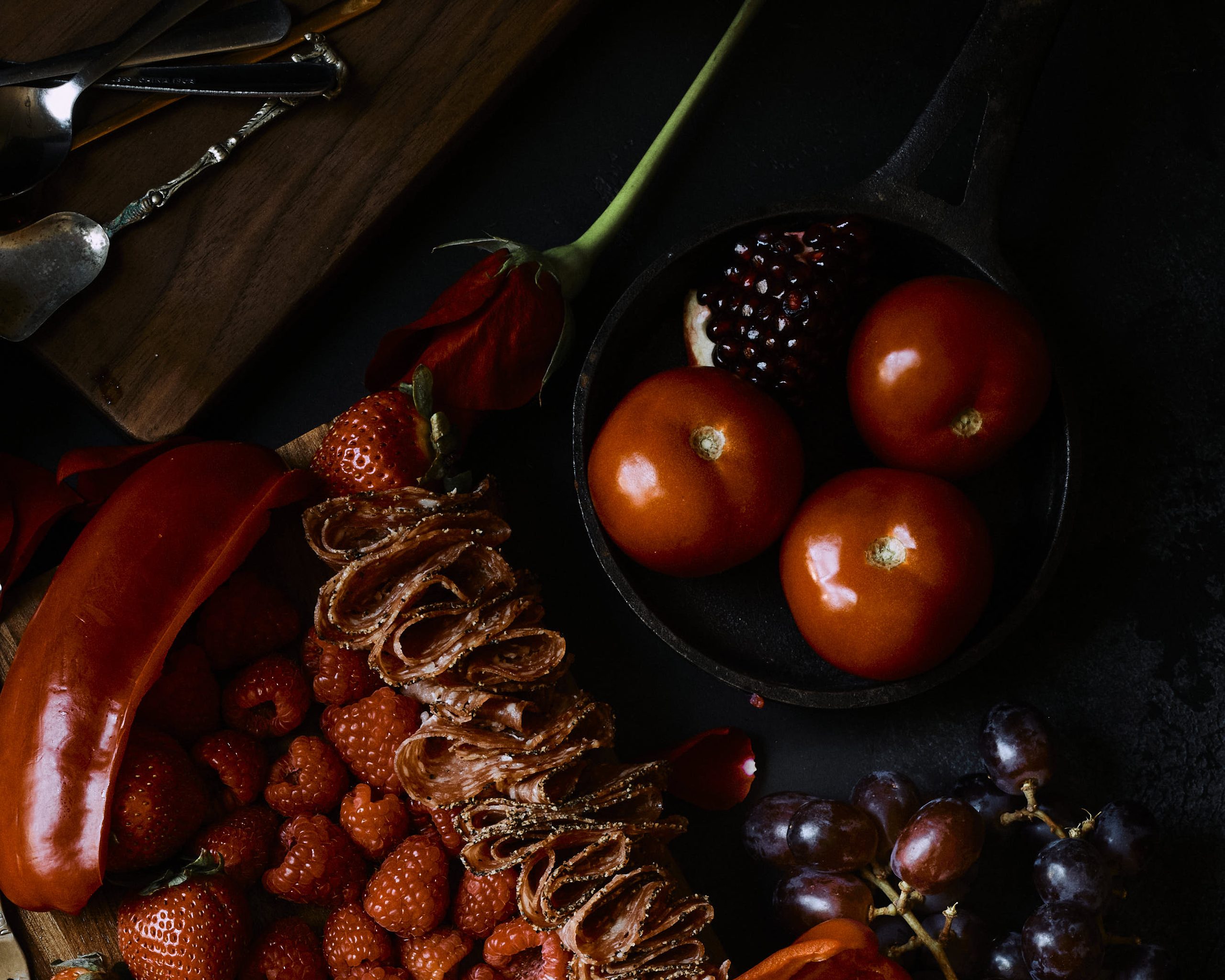
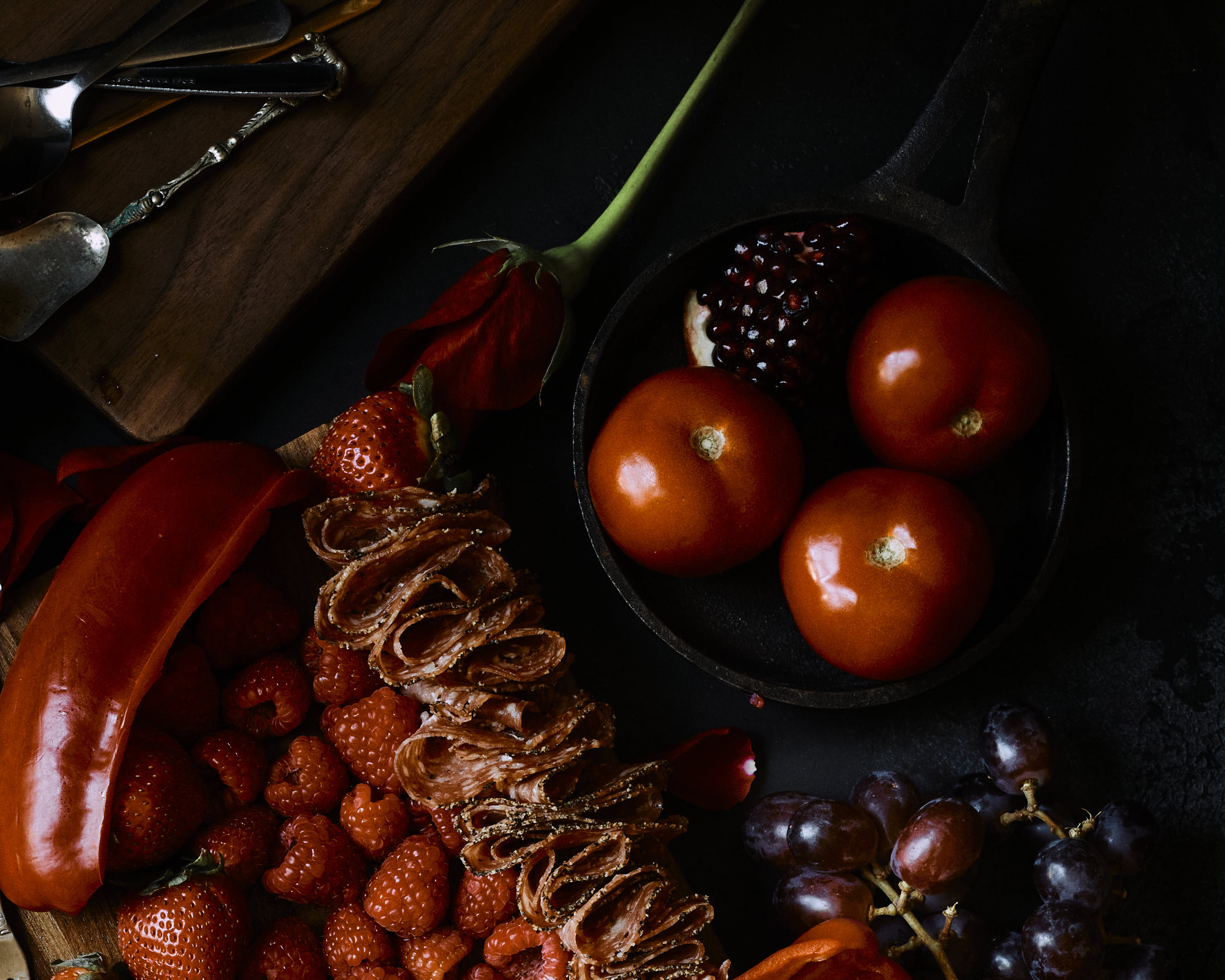
The first shoot it appeared in was my red series, Maneater. Yes, named after the Nelly Furtado song, and yes, I stand by that completely. The whole series was built around deep reds and blacks, and this little skillet held the tomatoes and the pomegranate. I knew before I even set it down that it was going to work. The iron was dark enough to anchor the composition without competing with the fruit, and there was this subtle rust tone in it that broke up what could have been a relentless sea of red and black. That little bit of warmth in the rust was exactly what the shot needed, and I hadn’t even planned for it. The skillet just brought it.
That’s the thing about a good prop. It gives you things you didn’t ask for.
Why Small Works When Everything Else Feels Like Too Much
I used to stress about using the same props across multiple shoots. I thought it would make my portfolio look repetitive, like I couldn’t be bothered to find new things. But the more I shot, the more I realized that was completely backward. Using the same prop in different contexts doesn’t signal laziness. It signals intention. It shows that you understand your tools well enough to keep finding new ways to use them.
This tiny skillet has held fruit, functioned as a pinch bowl, cradled sauces, and anchored compositions in ways I couldn’t have predicted when I pulled it out of that pile on Burnet Road. Every shoot teaches me something new about it. Every time I reach for it, I’m not repeating myself. I’m going deeper.
The Props You Return To Tell You Something
When a prop keeps showing up in your work, it’s worth paying attention to that. Not to analyze it to death, but to notice it. The things you return to are telling you what kinds of stories you like to tell, and how you like to tell them.
For me, it’s always been about bringing the past into the present. Finding something that has already lived a life and putting it in conversation with something fresh, like a bright piece of fruit, a glossy sauce, a single beam of window light. The textures you find in truly old things cannot be manufactured. You can’t buy that at a big box store. You have to go digging for it in a slightly chaotic antique shop on Burnet Road while the owner watches you knowingly from across the room.
That skillet has been in more of my frames than I can count at this point. And every time I reach for it, it still has something new to say.
Continue Reading
back to blog home

