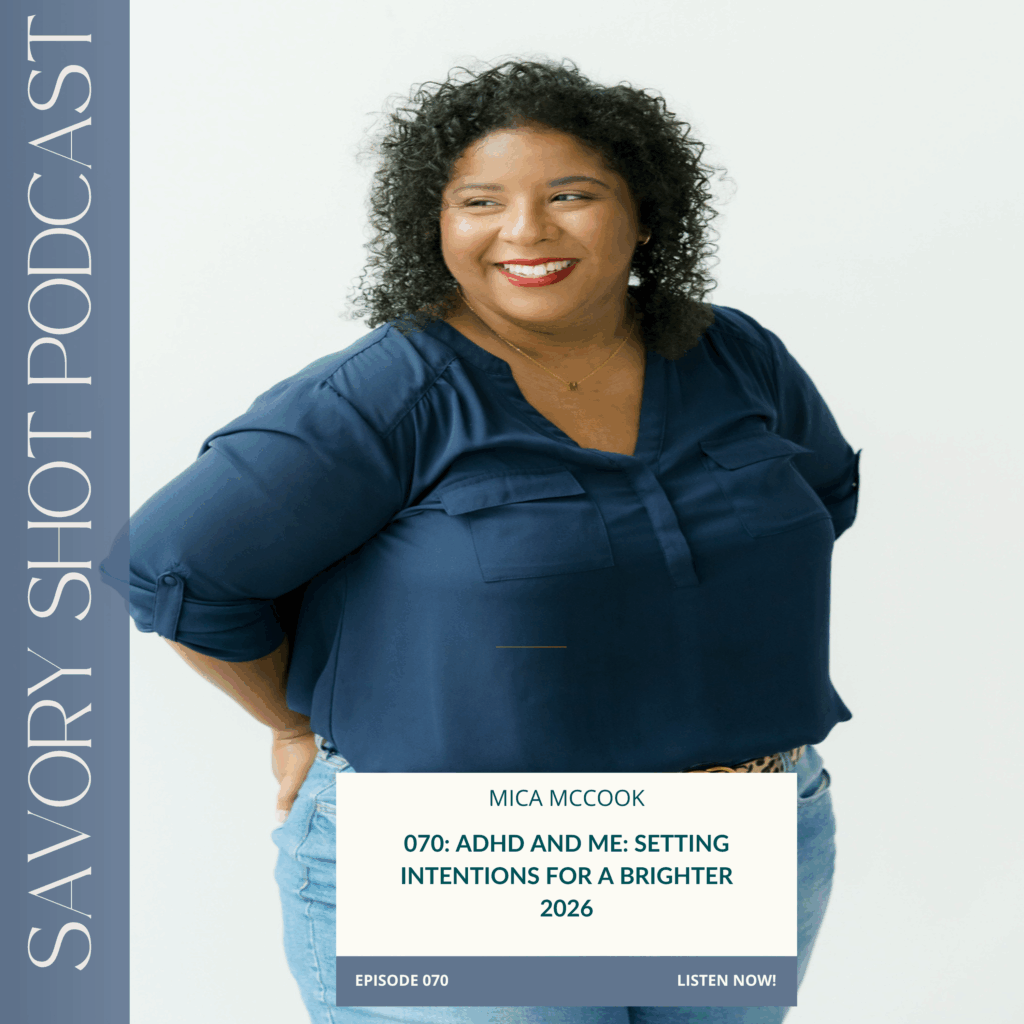
This episode of The Savory Shot is a deeply personal, grounding conversation about ADHD, creativity, and learning to work with your brain instead of against it. Mica McCook shares her late ADHD diagnosis and how it reframed years of burnout, shame, and confusion. What unfolds is not a clinical explanation, but a lived experience that many creatives quietly carry. This episode names the invisible struggles behind missed deadlines, mental exhaustion, and the cycle of hyperfocus and collapse. It also offers real, usable ways to build creative systems that feel supportive, sustainable, and humane.
Listeners walk away with language for experiences they may never have been able to explain. More importantly, they leave with permission to stop forcing themselves into workflows that were never designed for them.
The Hidden Cost of Creative Burnout
Burnout rarely shows up as a lack of passion. For many creatives, it appears as paralysis, overwhelm, and an inability to start tasks that matter deeply. Mica describes loving her podcast while feeling frozen by the process of producing it. Editing, writing notes, and publishing began to feel impossibly heavy. This disconnect between desire and execution created deep self doubt.
The episode reframes burnout as a neurological overload rather than a motivation failure. ADHD brains expend enormous mental energy on planning, decision making, and time management. When those systems overload, even small tasks can feel insurmountable. Recognizing this truth removes moral judgment from burnout and replaces it with understanding.
ADHD Beyond the Stereotypes
ADHD is often misunderstood as hyperactivity or distraction. Mica breaks down how it actually shows up in adult creative lives. ADHD influences how time is perceived, how tasks are started, how decisions are made, and how energy fluctuates. Many listeners will recognize themselves in the descriptions of mental exhaustion after shoots, intense focus followed by total depletion, and the inability to transition between tasks.
This episode expands the definition of ADHD to include emotional overwhelm, time blindness, executive dysfunction, and internalized shame. It offers clarity to listeners who may have dismissed their struggles because they did not fit outdated stereotypes.
Executive Dysfunction Explained Simply
One of the most powerful moments in the episode is the explanation of executive dysfunction. This refers to difficulty planning, organizing, prioritizing, starting, and finishing tasks. These are core requirements of creative work, especially for photographers, business owners, and content creators.
Mica explains how executive dysfunction does not remove capability. It disrupts access. The skills are there, but the brain struggles to activate them on command. Understanding this distinction allows creatives to stop shaming themselves and begin designing supports that bridge the gap between intention and action.

Meet the Host
In this solo episode, Mica McCook, food photographer and host of The Savory Shot, shares her personal journey with a late ADHD diagnosis. Based in Austin, Texas, Mica has built a successful creative career while navigating the unseen challenges of executive dysfunction, time blindness, and burnout. Her experience blends professional insight with lived truth, making this conversation both grounded and deeply human.
Discussed on this Episode
- Introduction framing burnout, missed episodes, and love for podcast amid creative paralysis.
- Late ADHD diagnosis reframes lifelong struggles with motivation, focus, shame, and burnout.
- Explanation of ADHD beyond stereotypes as a full way of experiencing work.
- Executive dysfunction described through difficulties planning, starting, organizing, prioritizing, and finishing tasks.
- Time blindness illustrated through shoots, routines, and distorted sense of passing hours.
- Task initiation struggles explored as paralysis rather than procrastination or lack discipline.
- Hyperfocus examined as intense productivity followed by exhaustion, guilt, and creative crashes.
- Practical coping tools shared including timers, visual clocks, external supports, and steps.
- Releasing productivity myths and all or nothing thinking to build sustainable routines.
- Closing vision focuses on designing creative workflows that honor neurodivergence and compassion.
Action Checklist
- Identify one recurring task that feels impossible to start despite strong motivation.
- Break that task into steps small enough to complete in under five minutes.
- Add at least two visible clocks to primary work or creative spaces.
- Use a timer for every focused work session, starting with fifteen minute intervals.
- Replace internal reminders with written or spoken external prompts.
- Reduce any workflow exceeding five steps by removing or combining steps.
- Schedule intentional recovery time after intense focus periods to prevent burnout.
Time Blindness and Creative Chaos
Time blindness is another central theme. Mica describes how time feels unreal or distorted, leading to underestimated timelines, missed transitions, and frantic catch up. This shows up on set, in daily routines, and in personal relationships.
The solution presented is not better discipline. It is external structure. Visual clocks, timers, and clear time boundaries help anchor the brain in reality. Bringing time into the physical environment removes the burden of internal tracking and reduces stress.
The Struggle to Start
Starting tasks emerges as one of the most relatable pain points. The episode makes clear that procrastination is not avoidance. It is paralysis. ADHD brains struggle with task initiation, especially when tasks contain multiple steps or vague instructions.
Mica shares how breaking tasks into extremely small actions helps bypass the mental barrier. Standing up, walking to the desk, opening a file. These micro steps reduce overwhelm and create momentum without force.
Hyperfocus Is Not Balance
Hyperfocus is often praised as a gift. This episode presents a more honest picture. Hyperfocus can lead to extraordinary productivity, but it often arrives without warning and leaves devastation behind. Skipped meals, ignored messages, and physical exhaustion follow.
The solution is awareness and containment. Learning to notice hyperfocus patterns allows creatives to plan recovery time, set external limits, and reduce guilt when energy crashes. Hyperfocus becomes a tool rather than a trap.
Tools That Support Neurodivergent Brains
This episode offers practical tools grounded in lived experience. Talking out loud to guide transitions. Using timers instead of internal clocks. Relying on external planning support like AI coaching tools. Designing workflows with fewer steps and clearer boundaries.
These tools work because they reduce cognitive load. They acknowledge how ADHD brains function rather than demanding conformity to neurotypical standards. The result is more consistency, less burnout, and a softer relationship with work.
Releasing Productivity Shame
A major takeaway is the rejection of productivity myths. Consistency does not have to look the same every day. Progress does not require perfection. Missing a start time does not invalidate effort.
Mica shares how learning to do partial versions of tasks changed everything. Shortened workouts, smaller work sessions, and adjusted expectations keep momentum alive. This mindset replaces all or nothing thinking with sustainable progress.
Creating Workflows That Flow
The heart of this episode is a commitment to building creative systems that honor the individual. Mica chooses workflows that match her energy, rituals that ground her, and boundaries that prevent burnout. Creativity becomes something to protect, not extract from.
Listeners are encouraged to stop forcing themselves into systems that create harm. Support is not weakness. Structure is not failure. Designing a life that works with the brain you have is an act of self respect.
A New Definition of Creative Success
This episode closes with a vision for a more sustainable creative life. One where rest is allowed, support is normal, and joy is not postponed. Creative success becomes something that feels nourishing rather than punishing.
The message is clear. Creativity is not broken. The brain is not behind. With understanding, support, and intentional design, creative work can feel lighter, steadier, and more human.
Repeatable Blog Framework
- Name the hidden struggle listeners feel but rarely articulate clearly.
- Normalize the experience without minimizing its real impact.
- Explain the root cause using accessible, non clinical language.
- Share a personal story that mirrors the listener’s internal experience.
- Identify the false belief causing shame or self blame.
- Replace that belief with a compassionate reframe.
- Introduce practical tools that reduce mental load.
- Explain how these tools work in everyday life.
- Emphasize flexibility over rigid productivity rules.
- End with reassurance that growth happens through support, not force.
Stay Connected
If this episode resonated with you, you do not have to carry it alone. Mica shares openly because connection is part of the work, not an extra. You can learn more about her, explore resources, and follow along as she continues navigating creativity, ADHD, and sustainable systems in real time. Visit her website to explore more episodes, tools, and insights, or reach out directly to share your story. Whether you are looking for collaboration, conversation, or clarity, this is an open door.
Resources
- YouTube – Video platform for ADHD education and research Visit YouTube
- TikTok – Social media platform referenced in relation to time awareness Visit TikTok
- Apple Podcasts – Platform to subscribe, review, and listen to podcasts Find The Savory Shot on Apple Podcasts
- Instagram – Platform for community connection and engaging with the host Follow Mica McCook on Instagram